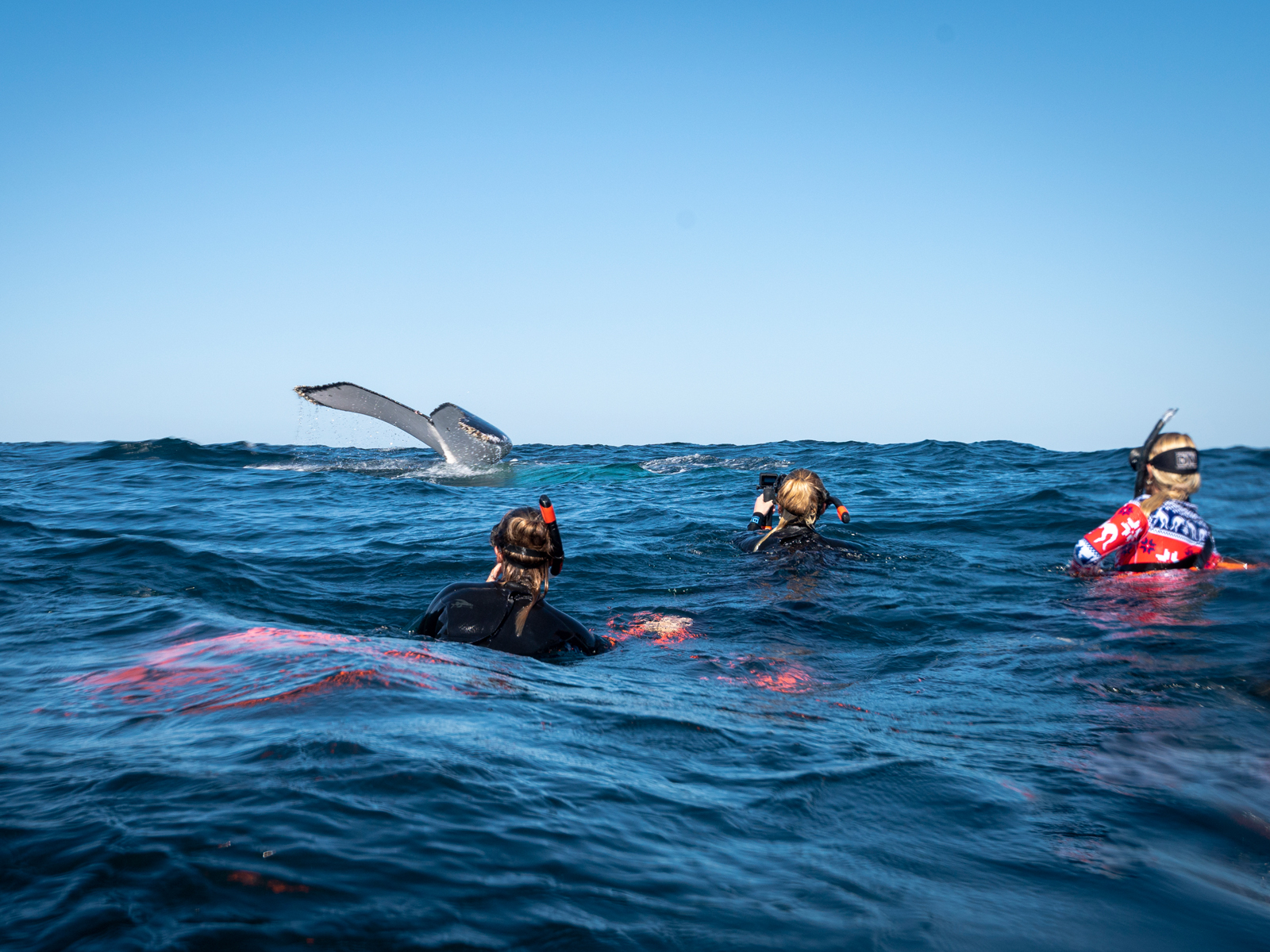
What to expect swimming with whales, step by step
- Check-in. On arrival at 139 Chinderah Bay Drive we check you in and ask you to sign a standard waiver form.
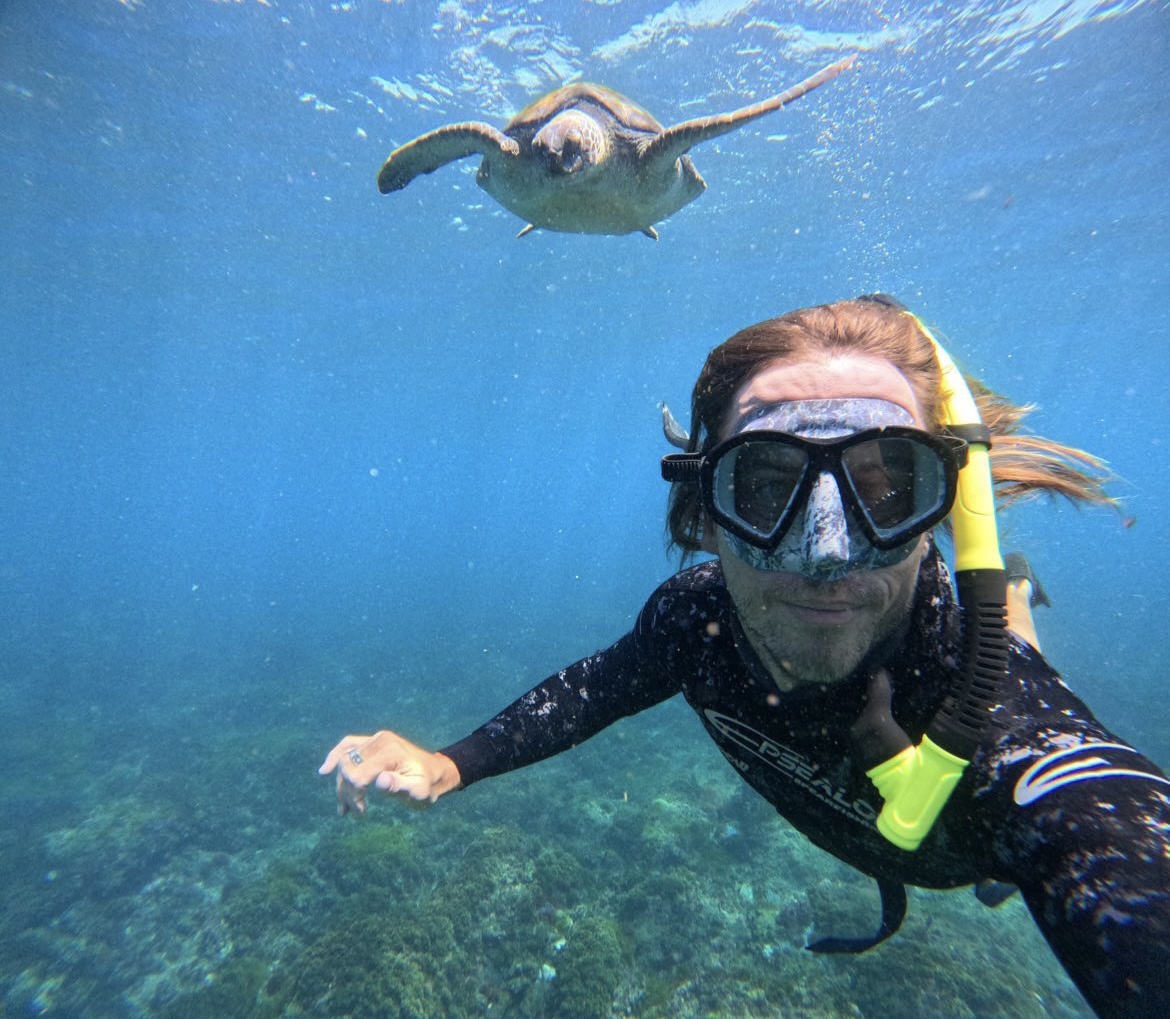
- Gear. The crew help you with your gear: a super warm wetsuit, mask, snorkel and fins.
- First briefing, before departure. How we will attempt to swim with whales, the rules and regulations for this activity, and the do's and don'ts, with time for your questions.
- Lifejackets on, then the boat. Your lifejacket is fitted and we board the vessel, a 32ft open ocean RIB (rigid inflatable boat).
- Second briefing, on the river. On the way down the Tweed River the crew show you how to use your gear correctly and run through how to enter and exit the water.
- The search. Out at sea we take our time to carefully search for the most receptive whales to swim with.
- The swim. When we find whales to swim with, you enter the water with an experienced guide.
- After the swim. Fresh fruit is served post swim.
The tour takes about 4 hours. To confirm with Lachy: tours.json and Rezdy say the swim tour is about 4 hours (240 minutes); the FAQ item says approx. 3 1/2 hours from departure. Which is right?
One swim tour a day, so nobody is rushed
We only run one whale swim tour a day, departing in the early morning when conditions are typically at their finest. With no back-to-back schedule we are never in a rush. Departures are listed at 6:30am and 11am (weather and tide dependent). To confirm with Lachy: The tour page and Rezdy list swim departures at 6:30am and 11am, but the same page says you only run one whale swim tour a day in the early morning. Which is correct?
How the whales are approached
There are rules and regulations to follow when watching and swimming with whales. We must stay at least 100 metres from a whale, and the approach for swimming is 30 metres. In-water interactions can be as close as that 30 metre approach, and the rest is up to the whale. Luckily the whales never get a copy of these regulations, and they often choose to come to us.
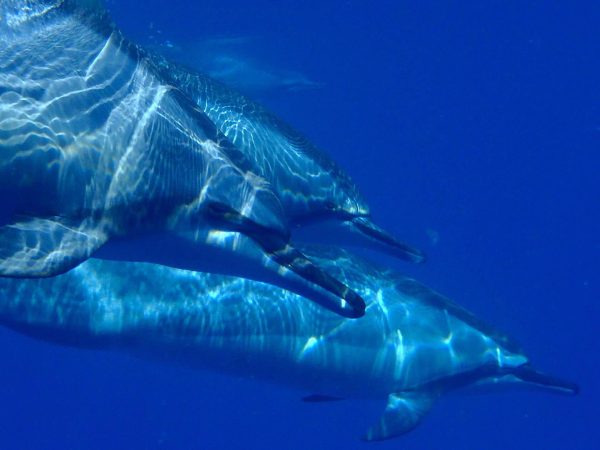
We do not chase, touch or disturb the whales for the sake of getting close; we let them decide if they would like to interact with us. When radio hosts from Juice 107.3 joined a swim, the group watched the whales play for about 10 minutes before getting into the water alongside them. Read more about how we keep whale swims respectful.
Entering the water with your guide
A maximum of 9 swimmers are in the water, accompanied by an experienced guide, with in-water support from the crew. We enter the water softly, quietly and as safely as we can. Remember this is a natural experience: the whales swim with us if they choose.
In the water you must not touch or attempt to touch a whale, dolphin or any other sea wildlife, you must not duck dive below the surface, and weight belts and flash photography are not permitted. These rules are in our terms and conditions, and anyone who breaches them can be asked to return to the boat.
Every swim is different: one guest "swam with whales twice", and on another swim a curious calf came in for a closer look (read The Magic of Swimming with Whales). To confirm with Lachy: How long are swimmers usually in the water on each swim, and how many swims happen on a typical tour?
Snorkelling ability and who can swim
- You must be able to swim unassisted.
- Snorkelling experience is necessary.
- The minimum age is 15 years, and anyone under 18 must be accompanied by a parent or guardian.
- The tour is not suitable for pregnant women or anyone with a back injury.
Flotation devices: what our pages say
The tour page lists "in water support from crew available as well as floatation devices" among the inclusions. Our terms and conditions (clause 2.6) ask each swimmer to confirm they are a competent strong swimmer, able to swim unassisted in open ocean conditions "without the need of any buoyancy aid". If you are unsure whether the swim suits you, call us on 1300 162 326 before you book. To confirm with Lachy: Are flotation devices allowed in the water on the whale swim? The tour page lists "floatation devices" as included, but terms clause 2.6 says swimmers must swim "without the need of any buoyancy aid". Which should the site say?
Safety on board
All crew are trained in First Aid, CPR/Oxygen and advanced resuscitation, and oxygen, a defibrillator and an Australian Maritime Safety Authority first aid kit are kept on board. Bring warm layers, a towel and a water bottle; see prices and inclusions for everything the ticket covers.